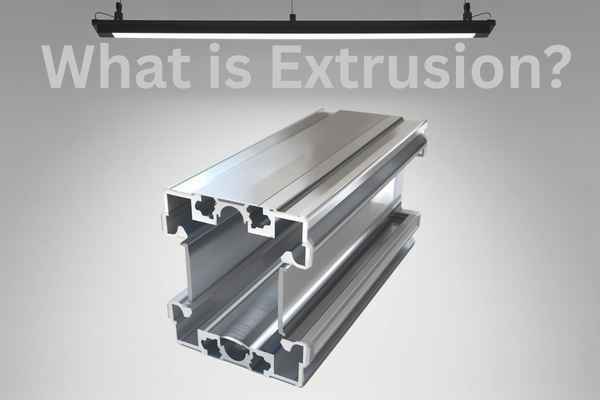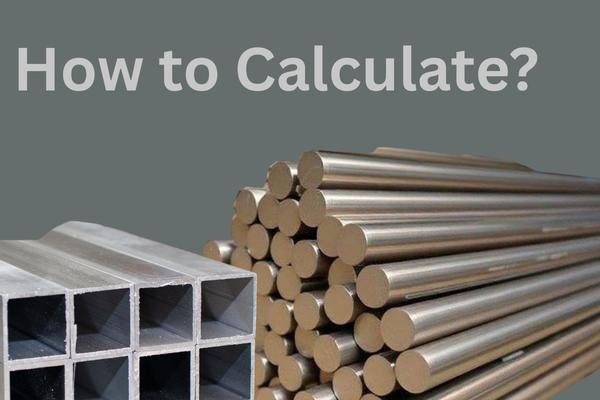
Calculating aluminium weight is essential for engineers, buyers, and manufacturers. In this guide, you will learn simple formulas to calculate aluminium weight for different shapes — round bars, rectangular bars, and hollow tubes.
Basic Formula for Aluminium Weight
The weight of any aluminium section depends on its cross-sectional area, length, and the density of aluminium. The standard density used for all calculations is:
The universal weight formula is:
The area formula changes depending on the shape of the section. The three most common shapes are covered below.
1. Circular Bar (Round Rod)
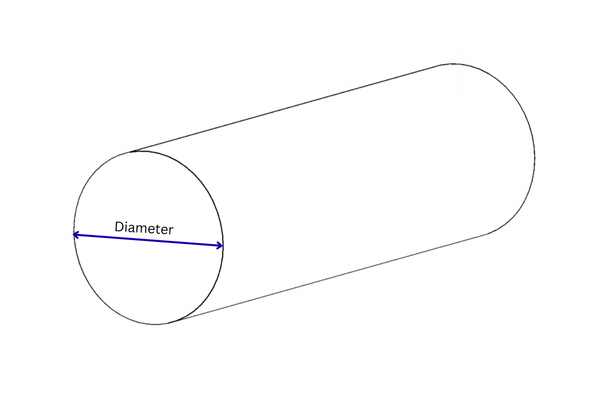
For a solid round aluminium rod, the cross-sectional area is calculated using the circle area formula:
Where D is the diameter of the rod in mm. Once you have the area in mm², convert to cm² by dividing by 100, then apply the weight formula.
2. Rectangular Bar
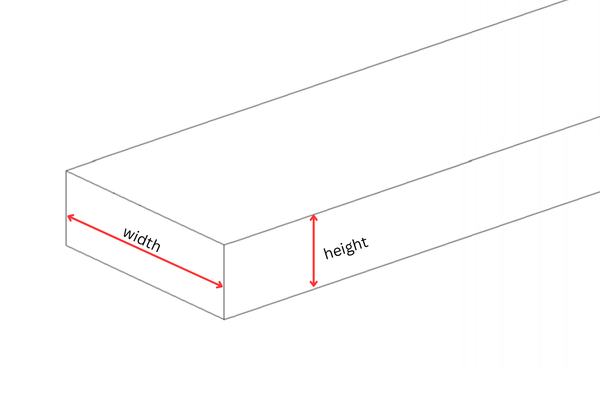
For a solid rectangular aluminium bar, the cross-sectional area is simply width multiplied by height:
Measure both dimensions in mm, calculate the area in mm², then convert and apply the weight formula. This covers flat bars, square bars, and any solid rectangular section.
3. Hollow Sections (Tubes)
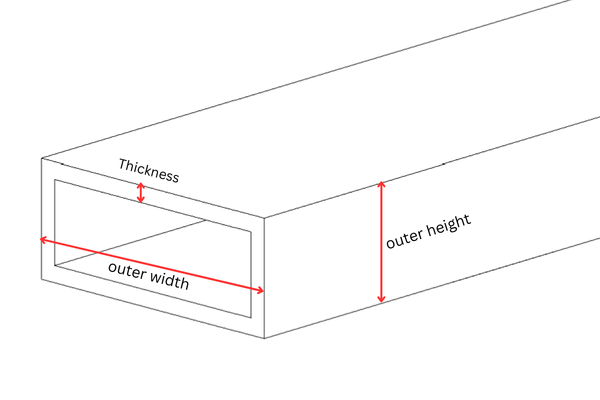
For hollow aluminium tubes or box sections, subtract the inner area from the outer area to get the actual material cross-section:
For a rectangular tube: (Outer Width × Outer Height) − (Inner Width × Inner Height). For a round tube: π/4 × (D_outer² − D_inner²).
Use Our Free Online Calculator
Don't want to do the maths manually? Our free weight calculator covers 12 standard aluminium sections — just enter the dimensions and get the weight instantly.
⚖️ Use Free Weight Calculator →Conclusion
Aluminium weight calculation is straightforward once you know the right formula for each shape. The key values to remember are the density of aluminium (2.7 g/cm³) and the correct area formula for your section type. Bookmark this guide or use our free calculator for quick results every time.